
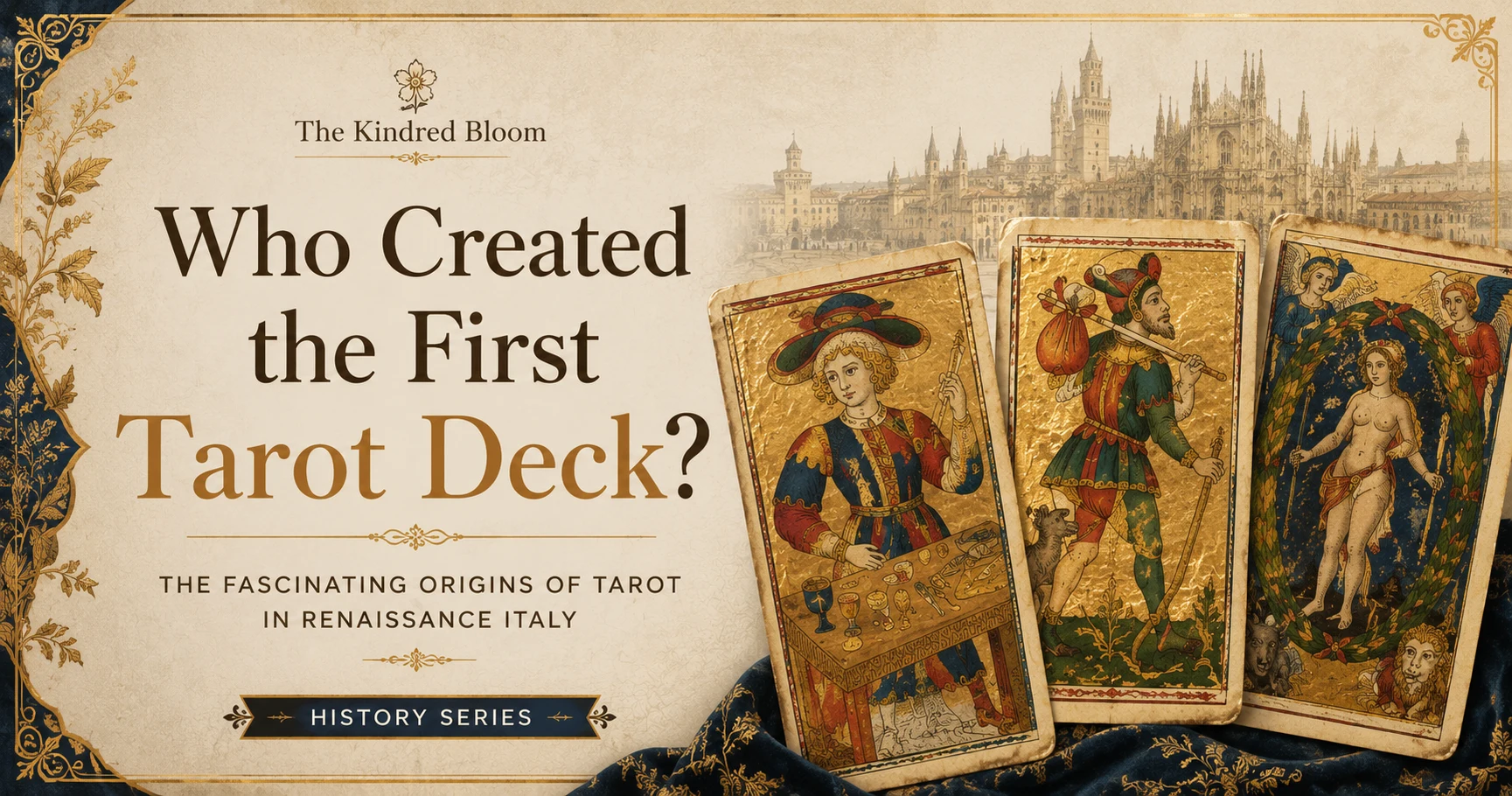
Discover the fascinating story behind the earliest known tarot cards and the people who brought them to life!
Have you ever wondered who actually created the first tarot deck?
It’s a question many beginners ask, but the answer isn’t as straightforward as you might expect. Unlike many famous inventions, tarot wasn’t created by one clearly identified person. Instead, it developed over time, with artists, noble families, and skilled craftsmen all playing a role.
Let’s explore what historians know about the earliest tarot decks—and why their story is even more fascinating than a simple name.
Was Tarot Invented by One Person?
The short answer is no.
Based on the historical evidence available today, there is no record of a single individual who invented tarot cards. Instead, tarot gradually emerged in northern Italy during the early 15th century.
At the time, beautifully hand-painted playing cards were becoming popular among wealthy families. Tarot was originally created as a luxurious card game rather than a tool for fortune-telling.
Rather than searching for one inventor, historians focus on the earliest surviving tarot decks that have been preserved.
The Visconti-Sforza Tarot
The oldest surviving tarot decks are known today as the Visconti-Sforza Tarot.
These remarkable decks were commissioned during the mid-15th century by the powerful Visconti and Sforza families, who ruled Milan in northern Italy.
Unlike modern tarot decks printed in large quantities, each card was painted by hand and decorated with gold leaf. They were not everyday playing cards but luxurious works of art created for members of the nobility.
Although some cards have been lost over the centuries, many still survive today in museums and private collections, offering an extraordinary glimpse into the earliest history of tarot.
Who Painted the First Tarot Cards?
Several artists may have contributed to these early decks.
The painter Bonifacio Bembo is often associated with the Visconti-Sforza Tarot because the style of some surviving cards closely matches his known artwork. However, historians cannot say with complete certainty that he painted every card, and other artists may also have been involved.
For this reason, it is more accurate to say that Bembo was likely one of the artists who contributed to the earliest surviving tarot decks, rather than the sole creator of tarot itself.
This distinction reflects what the historical evidence supports and helps separate established facts from popular assumptions.
Why Were the First Tarot Decks Created?
The earliest tarot cards were designed for entertainment.
Known in Italy as carte da trionfi (“cards of triumphs”), these decks expanded traditional playing cards by adding a special set of illustrated trump cards. The additional cards made the game more strategic while showcasing the wealth and artistic taste of the families who commissioned them.
Many of the iconic figures we recognize today—including The Fool, The Magician (then known as Il Bagatto), and The World—already appeared in these early decks. However, they were originally part of a sophisticated card game, not a system for predicting the future.
The connection between tarot and divination would not become widely popular until several centuries later.
What Historians Know Today
Although we cannot identify a single inventor of tarot, historians generally agree on several important points:
- Tarot first appeared in northern Italy during the early 15th century.
- The earliest surviving tarot decks were commissioned by the Visconti and Sforza families in Milan.
- Bonifacio Bembo is widely believed to have been one of the artists involved, though he was probably not the only one.
- Tarot was originally created for playing games rather than fortune-telling.
While historians continue to study surviving cards and historical records, this remains the most widely accepted understanding of tarot’s origins.
Although we may never know the name of the person who first imagined tarot, the surviving decks offer a remarkable glimpse into Renaissance Italy. What began as a beautifully crafted card game would eventually become one of the world’s most recognizable symbolic traditions.
By learning where tarot truly began, we gain a deeper appreciation for the cards—not only as tools of symbolism, but also as fascinating pieces of history, art, and culture.
Continue Exploring Tarot History
Curious about what came next? Continue your journey with these beginner-friendly guides:
Each article uncovers another chapter in tarot’s story, helping you understand not only what the cards mean, but also how they came to be.